
Building a connected customer experience through journey mapping and CRM strategy
The challenge
Tourism Australia works with state tourism organisations and industry operators to help international visitors discover and experience Australia.
While Microsoft Dynamics had been implemented as the organisation’s CRM platform, customer and stakeholder information remained fragmented across teams, systems and processes. Different groups engaged industry stakeholders in different ways, often relying on spreadsheets, manual processes and disconnected data.
The challenge was bigger than CRM adoption alone. Without a shared view of audiences, stakeholder journeys and engagement processes, it was difficult to create a consistent customer experience, identify opportunities for personalisation, or understand how different interactions connected across the broader journey.
Tourism Australia needed to better understand its audiences, map the current experience, identify pain points and opportunities, and create a roadmap for how people, processes and technology could work together to support a more connected customer experience.
The solution
Creating a roadmap for a connected customer experience
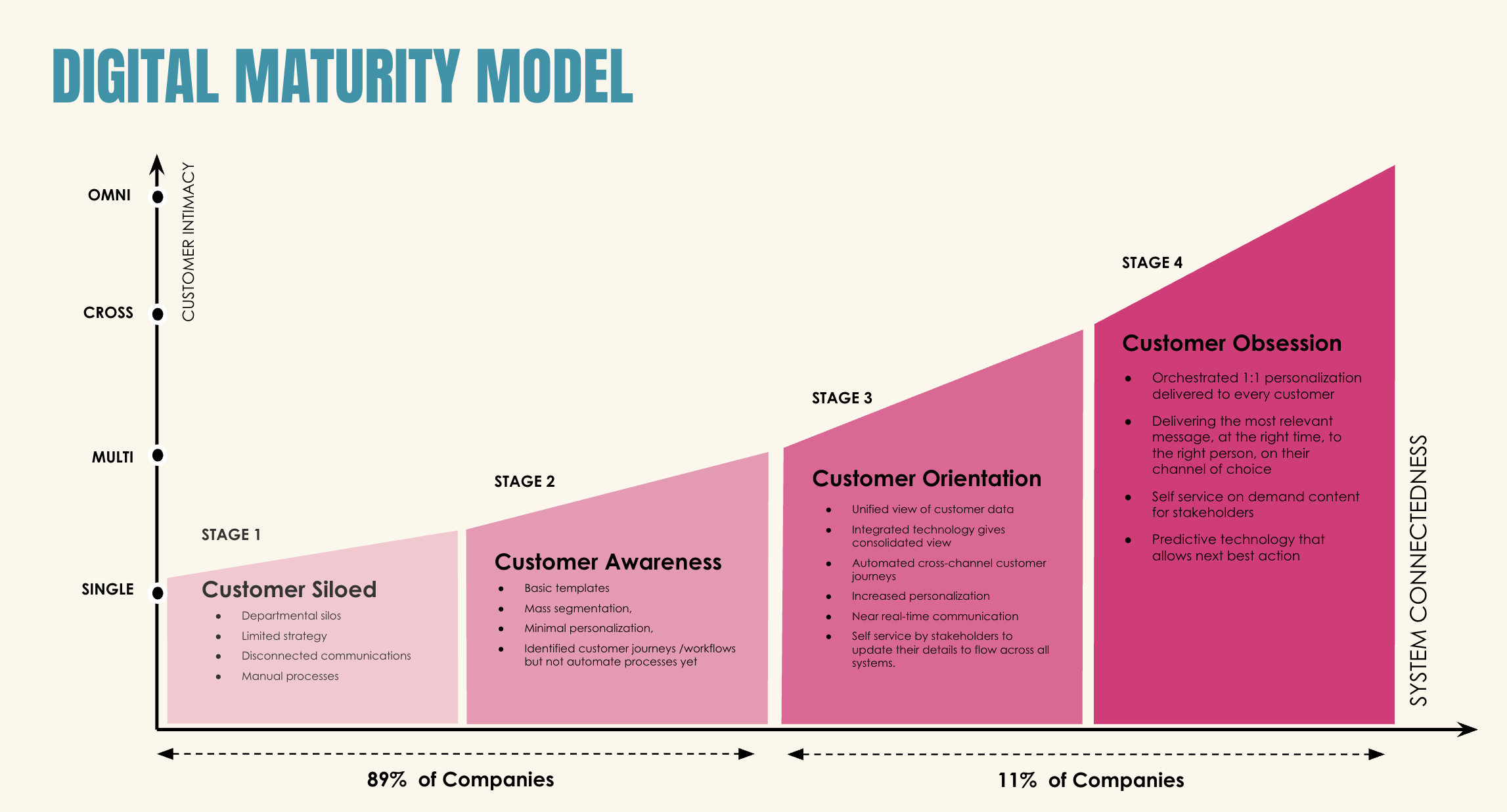
Digital maturity assessment
The project began with a digital maturity assessment to understand how effectively Tourism Australia’s people, processes, data and technology supported customer and stakeholder engagement. The assessment provided a baseline of current capability, identified barriers to adoption and helped create executive alignment around the need for change and future investment.
Team value stream mapping
Building on these findings we conducted ‘value stream mapping’ – a process to deeply analyse individual team processes, the tools used and the gaps. This helped identify the enabling projects to improve the customer journey.
Data-driven customer journey mapping
The customer journey was developed through analytics review, customer sentiment data and team workshops to understand audience needs, engagement processes and customer experience opportunities.
By combining journey mapping, audience segmentation, process analysis and CRM review, the project identified opportunities to create a more connected customer experience while improving the internal systems and processes needed to support it.
The result was a strategic roadmap that included both customer-facing opportunities and enabling business initiatives.
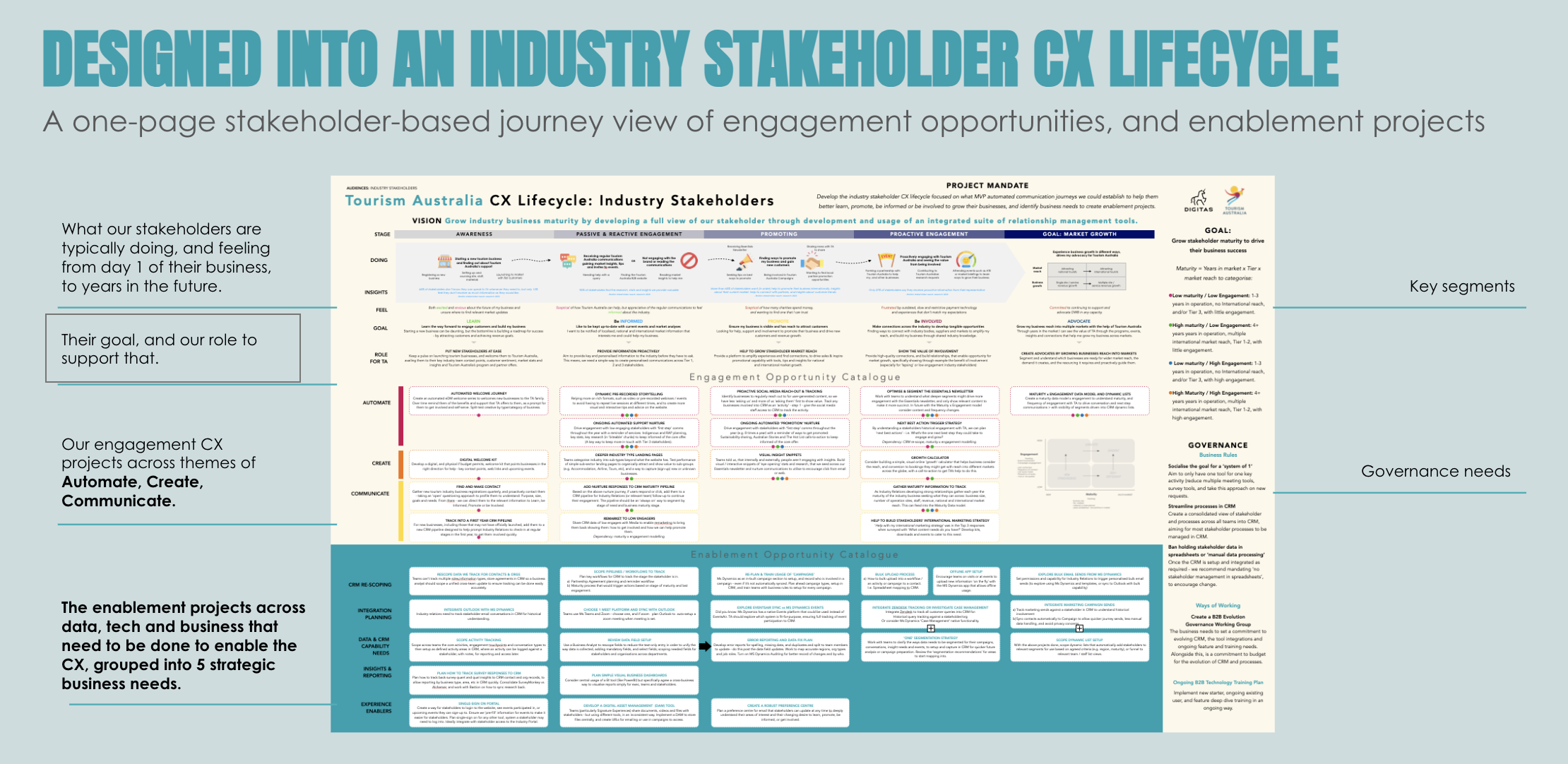
Customer experience initiatives included:
improved audience segmentation and targeting
automated communications and engagement journeys
more personalised stakeholder experiences
new engagement and communication opportunities across the customer lifecycle.
Enabling initiatives included:
improved CRM adoption and governance
better data structures and reporting
process redesign across teams
clear ownership of customer interactions
a roadmap for future investment in Microsoft Dynamics and supporting capabilities.
Together, these recommendations created a shared vision for how Tourism Australia could deliver a more connected customer experience while strengthening the organisational capabilities required to support it.
The result
The project provided Tourism Australia with:
a clear view of audience and stakeholder journeys
a shared vision for the future customer experience
prioritised customer-facing opportunities across communications, engagement and automation
improved audience segmentation and targeting opportunities
greater alignment between teams, processes and technology
a roadmap of enabling projects across CRM, data and business processes
evidence-based recommendations to support future technology investment.
Most importantly, the project connected customer experience strategy with the operational changes required to deliver it. Rather than viewing CRM as a standalone technology initiative, Tourism Australia gained a roadmap that linked customer needs, business processes, data and technology into a single vision for future growth and engagement.