Shopping for purpose: The rise of product-based giving

There’s a quiet shift in Australian philanthropy and giving. Traditional fundraising – face-to-face bucket collections, direct mail, appeals and grants – still plays a vital role. But it is no longer the only engine of growth.
According to the latest Australian Charities and Not-for-profits Commission (ACNC) data, the sector generated a record $222 billion in total revenue in the last reporting period (ACNC 11th Charity Report, 2025). Remarkably, a full one-third of that, $74 billion, came not from grants or donations, but from the sale of goods and services (ACNC 11th Charity Report, 2025).
That proportion reframes how we think about sustainability in the sector.
The rise of the socially conscious consumer
A major driver of this shift is a fundamental change in donor behaviour, particularly among younger Australians. Gen Z and Millennials are increasingly moving away from traditional 'blind' donations in favour of socially conscious consumerism. Research indicates that nearly 50% of Gen Z prefer to support charities that offer a 'tangible' way to give, often choosing to 'vote with their wallet' through everyday purchases rather than traditional appeals (McCrindle Australian Communities Report, 2025). This 'impact buying' treats the transaction as a form of activism, providing the clarity and sharability that younger generations demand.
Across Australia, charities are responding by supplementing fundraising with trading activity. Op-shops are operating as professional retail networks. Donations are being framed as tangible, specific outcomes. Purpose-led brands are embedding impact into everyday purchases.
Here is how four well-known Australian organisations are using product-based models to generate income and extend impact.
1. Professionalising the op-shop: Salvos Stores
The Salvation Army’s Australian retail arm, Salvos Stores, has moved far beyond the 'corner shop' stereotype. With a national footprint and a stronger focus on customer experience, the network now generates more than $228 million in annual revenue in Australia (Salvation Army Annual Report, 2025).
A major shift has been digital capability. When Salvos launched Australia’s first large-scale online op-shop, online sales increased by more than +212% (Salvos Stores Impact Report, 2021). Donated goods were repositioned as searchable, shoppable inventory rather than purely local stock.
2. Cause-related products at scale: McHappy Day Australia
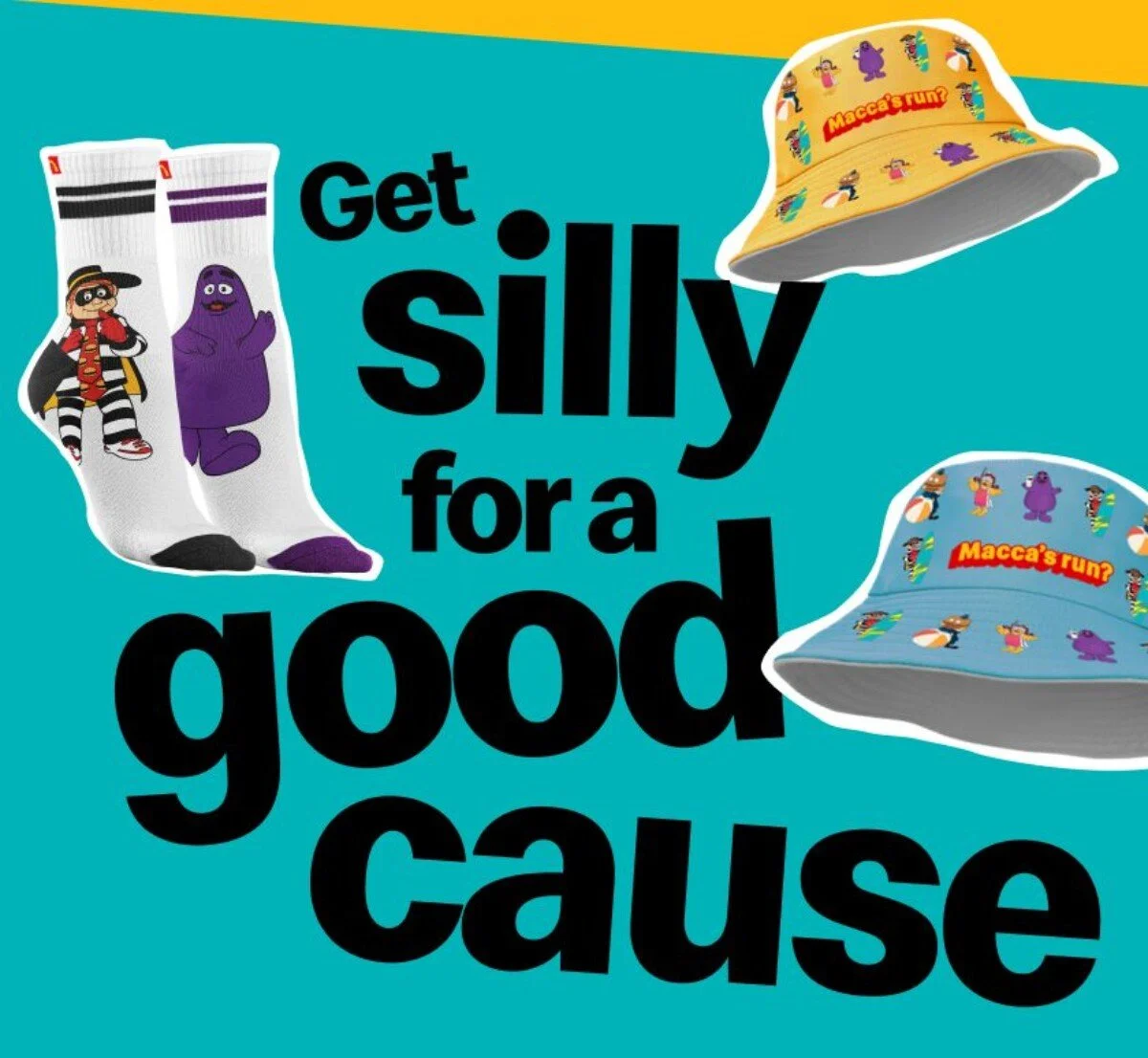
McHappy Day remains one of Australia’s most recognisable cause-related campaigns. For Ronald McDonald House Charities Australia, the model links fundraising directly to everyday commercial behaviour.
McHappy Day 2025 raised $4.8 million nationally (McHappy Day 2025). The model combines several product layers:
The micro product: $2, $10 and $50 Helping Hands, designed for low-friction participation
The merchandise: Limited edition merchandise such as Silly Socks
The commercial partner: A $2 contribution from every Big Mac sold on the day
By attaching giving to an existing purchase, the model reduces the decision friction often associated with standalone donation appeals. The cause becomes part of a transaction people were already planning to make.
While we know that many NFPs don’t have the commercial reach and power of McDonalds, we do believe this can inspire product, merchandising and potential partnership opportunities with brands that have audience overlap.
3. Product disruptors: Thankyou and Who Gives A Crap
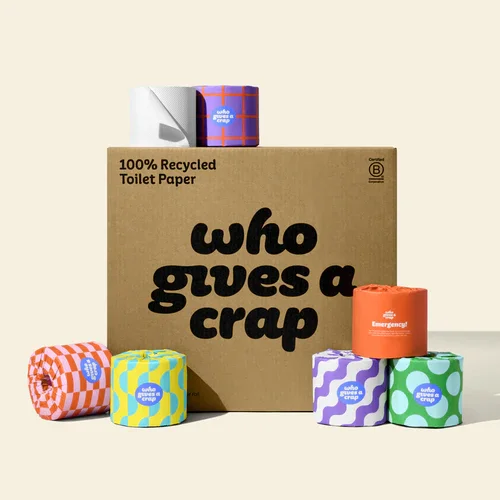
Melbourne has produced several globally recognised purpose-led consumer brands.
Thankyou sells personal care products and directs 100 percent of profits to impactinitiatives, contributing more than $19 million to date (Thankyou Impact Data, 2025/26).
Who Gives A Crapdonates 50 percent of profitsfrom its toilet paper and household products to sanitation projects, contributing more than $13 million globally (Who Gives A Crap Impact Report, 2025).
In both cases, the product itself is the primary acquisition engine. Customers are not asked to donate after purchase. The purchase is the donation mechanism. These brands show an opportunity for NFPs to transform by tapping into the brand loyalty of Millennials and Gen Z who prefer their impact to be ‘baked-in’ to the products they use daily (McCrindle Australian Communities Report, 2025).
These models rely on brand strength, supply chain capability and customer loyalty in the same way any consumer goods business would.
These brands show an opportunity for NFPs to transform.
4. Productising impact: The Fred Hollows Foundation ‘Inspired Gifts’
The Fred Hollows Foundation offers a different version of product-based giving. Through its Inspired Gifts catalogue, supporters can 'buy' a cataract surgery for $25.
In 2024, this symbolic gifting model generated $3.4 million in revenue (The Fred Hollows Foundation Annual Report, 2024).
By attaching a specific outcome to a defined amount, the organisation provides clarity and tangibility. Rather than donating to a general fund, supporters understand the direct result of their contribution.
Why product-based charity is growing
The move toward hybrid revenue models is driven by three major local factors:
Digital maturity: Australian donors are tech-savvy; e-commerce allows charities to scale sales 24/7.
The 'Trust premium': Modern Australian consumers demand proof of impact, often looking for 'B Corp' certification as a marker of trust.
Cost-of-living resilience: During economic downturns, traditional donations may dip, but Australians still need to buy essentials like soap, socks, and food.
Revenue diversification is becoming more important as funding sources fluctuate and competition for grants intensifies. For some organisations, commercial income now provides a stabilising layer that sits alongside donations and grants rather than replacing them.
A challenge to traditional charity models
Product-based revenue is not a silver bullet. It requires operational discipline, customer thinking, and digital capability. But it is already a significant part of how the Australian sector funds its work.
With more than $70 billion in commercial income flowing through charities each year, trading activity is no longer peripheral. For some organisations, it provides stability. For others, it enables scale.
If you are exploring revenue diversification, the starting point is not 'What can we sell?' It is:
What outcome of our work is tangible and clearly valued?
What existing assets - merchandise, expertise, intellectual property, community reach - could be packaged differently?
Do we have the digital infrastructure to distribute, measure and optimise this effectively?
Product-based models succeed when they are treated as real customer experiences, not fundraising add-ons.
For many NFPs, the opportunity is less about inventing something new and more about reframing and digitising what already exists.
Sources and references
ACNC (2025): Australian Charities Report 11th Edition
McDonald's Australia (2025): McHappy Day 2025 Thank You
Salvation Army Australia (2025): Annual Report 2025
Salvos Stores (2021): Impact Report 2021
McCrindle Research (2025): Australian Communities Report 2025
Thankyou Group (2026): Our Impact – Live Giving Data
Who Gives A Crap (2025): 2024–2025 Impact Report
The Fred Hollows Foundation (2025): Annual Report 2024